


Last Updated on August 25, 2026 by Lori Geurin
Have you ever eaten a healthy breakfast, made it through a reasonable lunch, and then found yourself standing in the kitchen at 3 pm reaching for something sweet, wondering why you just cannot seem to stop?
If that sounds familiar, this post is for you.
Here is the truth that changed everything for me: sugar cravings are not a willpower problem. They are a biology problem. And once you understand what is actually driving them, they start to lose their power over you.
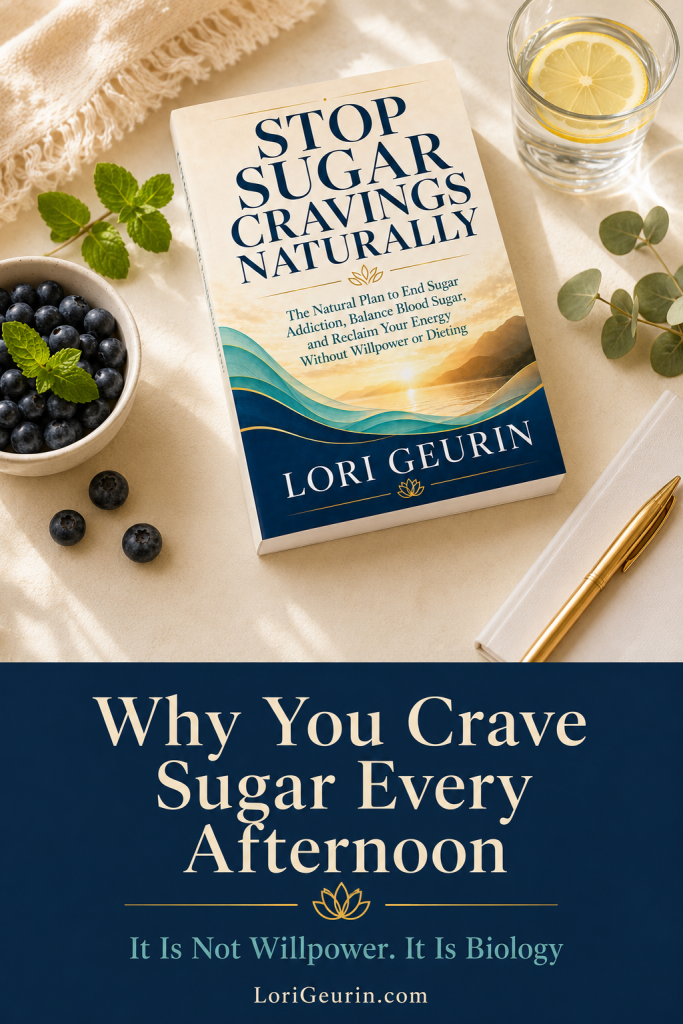
Why Your Sugar Cravings Are Not Your Fault
Most of us have been told that cravings are a sign of weakness or poor self-control. So we try harder. We white-knuckle through the afternoon. We feel guilty when we give in. And then we start over on Monday.
But here is what that approach misses entirely: your body is not broken. Your brain is responding normally to an abnormal food environment.
When you eat refined sugar or processed carbohydrates, glucose floods your bloodstream quickly. Insulin surges to manage it. Blood sugar drops sharply. And at the bottom of that drop, your brain sends one urgent signal: eat something sweet, right now.
This is the blood sugar rollercoaster. It is not a character flaw. It is chemistry.
The Hidden Drivers Behind Daily Cravings
Blood sugar instability is just one piece of the picture. Several other factors quietly fuel the craving cycle throughout the day, and most people never connect the dots.
Stress and cortisol. When you are stressed, your body releases cortisol, which raises blood sugar in preparation for a perceived threat. When that blood sugar drops, cravings follow. This is why hard days almost always end with a reach for something sweet.
Poor sleep. Even one or two nights of inadequate sleep increases ghrelin, your hunger hormone, and decreases leptin, your fullness hormone. The result is stronger cravings, lower resilience, and a specific pull toward sugar and refined carbohydrates the following day.
Emotional triggers. Food becomes comfort, reward, distraction, and relief over time. When something difficult happens, the brain reaches for the fastest available source of dopamine. For most people, that means sugar.
Hidden sugars. Many foods marketed as healthy, including flavored yogurt, granola bars, and salad dressings, contain as much sugar as a candy bar. Ingredient splitting allows manufacturers to hide multiple forms of sugar throughout the label so no single entry looks alarming.
Understanding these drivers does not make the cravings disappear overnight. But it does give you something far more useful than willpower: information.
Simple Strategies That Actually Work
Start With Protein at Your First Meal
Whether you eat breakfast early or follow an intermittent fasting schedule and eat your first meal later in the day, leading with protein changes your blood sugar trajectory for hours. Protein slows the absorption of glucose, keeps you satisfied for longer, and reduces mid-morning and afternoon cravings significantly.
Eggs, Greek yogurt, cottage cheese, or a protein smoothie with nut butter are all solid options. The goal is to make protein the centerpiece rather than the afterthought.
Latest Blog Posts:
- How to Have a Difficult Conversation When You Don’t Know What to Say
- Why You Feel Tired After Eating: Common Causes of Energy Crashes and Simple Ways to Feel Better
- When Wellness Starts Feeling Like Another Job: A Gentle Midlife Reset
- Digital Wellness for a Calmer Life: How to Reduce Screen Time, Mental Clutter, and Everyday Stress
- Why Metabolic Health Is the Missing Piece: Understanding Your Energy, Cravings, and Weight Gain
Sequence Your Meals Strategically
Research shows that eating vegetables first, then fat and protein, and then carbohydrates at the end of a meal can reduce post-meal blood sugar spikes by a meaningful amount. This does not require changing what you eat, only the order you eat it in.
Start with the salad or roasted vegetables on your plate. Finish the protein. Then add the carbohydrates or any sweet element at the end. It is one of the simplest and most effective blood sugar tools available.
Take a 10-Minute Walk After Meals
A short walk after eating activates your muscles, which absorb glucose from the bloodstream independently of insulin. This blunts the post-meal blood sugar spike and reduces the likelihood of a craving arriving an hour later. Even a gentle walk around the block counts.
Drink Water Before Reaching for a Sweet Snack
Mild dehydration frequently mimics hunger and craving signals. Before responding to a between-meal craving, drink a full glass of water and wait ten minutes. This resolves the craving more often than most people expect.
What to Do When You Slip
Progress is not linear. There will be hard days, stressful weeks, and moments when the old pattern takes over. That is not failure. That is being human.
When a slip happens, the most important thing is to return to your normal eating at the very next meal. Not tomorrow. Not Monday. The next meal. You are not starting over. You are continuing.
A single difficult day does not erase weeks of progress. The habit of recovering without drama is just as important as the habit of eating well.
Ready to Go Deeper?
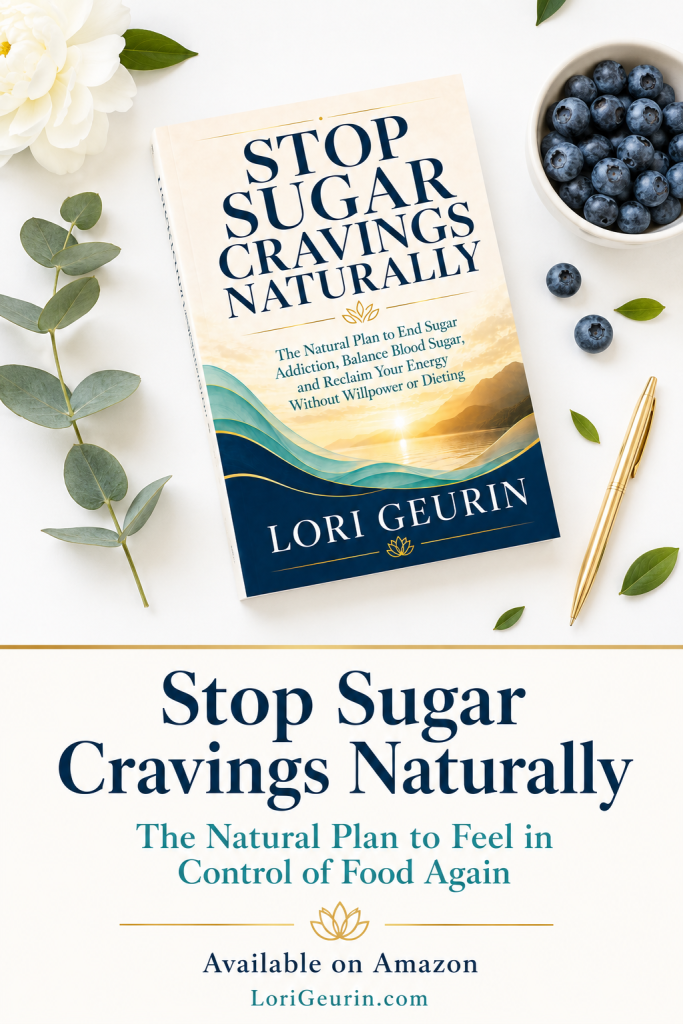
Everything covered in this post, and much more, is laid out in full detail in my new book, Stop Sugar Cravings Naturally: The Natural Plan to End Sugar Addiction, Balance Blood Sugar, and Reclaim Your Energy Without Willpower or Dieting.
Inside you will find the complete science behind why cravings happen, the Craving Control Trio, the Stabilizer Stack, a guide to hidden sugars and how to spot them on labels, tools for emotional eating and stress responses, and a complete 30-Day Craving Reset Plan you can start immediately.
No extreme diets. No forbidden foods. No shame. Just practical, compassionate strategies built for real life.

Grab your copy on Amazon in Kindle or paperback: Stop Sugar Cravings Naturally on Amazon
If this post resonated with you, save it and share it with someone who needs it. You never know whose day it might change.


